How to Maintain a Shaved Head: A Simple Care Routine

Article Summary
My routine: shave every few days, wash with a cleanser your scalp tolerates, and apply a thin layer of moisturizer after shaving. Protect exposed skin outdoors and choose a finish that suits you.
Maintaining my shaved head is straightforward: I wash with bar soap, use a moisturizer, and usually shave once every few days. After a razor shave, I prefer a richer cream, such as one with colloidal oatmeal, though I often use whatever moisturizer I have available.
Keeping up with the shave makes a difference for me. When I let the hair grow too long, it clogs my cartridge razor and makes it harder to judge the shave by feel.
Here is how I approach that routine, along with guidance for caring for exposed skin between shaves.
How often should you shave your head?
I usually shave every few days, while the regrowth still feels like short, gritty stubble. I can feel it as I glide the razor across my scalp, and running my hand over the area afterward helps me find patches I missed.
When I leave it longer, the hair feels softer and less bristly, so I find it harder to judge the shave by touch. It is also harder for my cartridge razor to cut cleanly and more likely to clog. Keeping it short makes the next shave easier for me.
Use that as one example when choosing your own schedule. How much stubble you like, how quickly your hair grows, and how your scalp feels after shaving all matter. Getting back to a perfectly smooth finish can wait if your scalp is still irritated.
If your hair has grown beyond short stubble, trim it with clippers before going back to a cartridge razor. In my head-shaving guide, I demonstrate the full process, including how I check the back and work around the ears.
What to put on your scalp after shaving
After rinsing away the shaving cream and loose hair, I start with roughly a half-dollar-sized amount of moisturizer and spread it in a thin layer across my entire scalp while the skin still feels supple from the shave. That is my starting amount; adjust it to your preference. Moisturizing also helps with the flaking I get when my scalp becomes too dry.
Gently patting the skin with a clean towel and applying moisturizer while it is still slightly damp follows the American Academy of Dermatology's dry-skin guidance.
My preference after razor shaving is a heavier cream, ideally something with colloidal oatmeal. I find a razor shave can be more intense on my skin, so this is where I prefer a richer moisturizer. I do not stick to one particular brand.
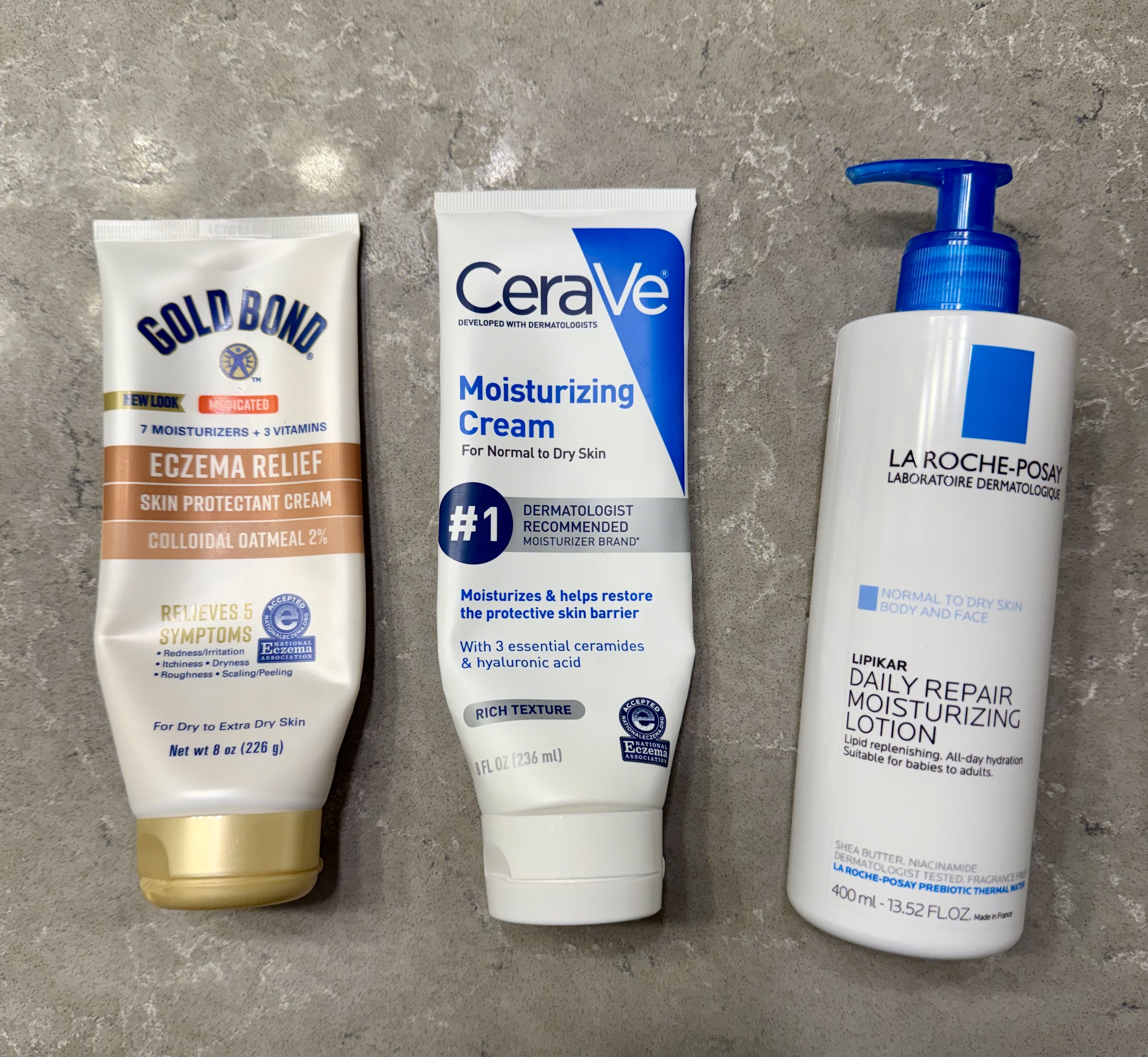
For dry or sensitive skin, look for a gentle, fragrance-free product. AAD recommends creams or ointments for dry skin; the texture you prefer may depend on how your scalp feels. My preference for colloidal oatmeal is a personal choice, not a requirement for maintaining a shaved head.
Washing your scalp between shaves
I use ordinary bar or body soap on my head and find that it removes the oils well. Pay attention to how your own cleanser leaves your skin feeling. If it feels tight or dry afterward, try a gentle, fragrance-free cleanser; AAD notes that some soaps, including deodorant soaps, can be too harsh for dry or sensitive skin.
Choose a cleanser your skin tolerates. The important part is how it works for you, rather than whether the label markets it specifically for bald heads.
Protect your scalp when you are outdoors
If I am heading outside without a hat, sunscreen is part of the routine, especially when I expect to be out for a while. A shaved scalp is exposed skin. Include it and your ears when applying sunscreen, and use a hat and shade for additional protection.
AAD recommends broad-spectrum, water-resistant sunscreen with SPF 30 or higher for exposed areas of the scalp. Reapply every two hours while outdoors and after swimming or sweating, following the product's directions. Its guidance for bald or thinning areas explains the sun-protection requirements.
A natural finish or extra shine?
Some guys like a shinier finish and use head wax for that look. I prefer a natural finish. I still grow hair on the sides and back of my scalp, so there can be visible stubble as it grows back. Adding shine alongside that stubble would draw attention to my head in a way I do not particularly want.
It comes down to the look you prefer. Extra shine is an optional styling step.
Do you need to exfoliate a shaved head?
Exfoliation is optional. There is no single schedule that suits every scalp. The right approach depends on your skin, other products you use, and the exfoliation method. AAD warns that over-exfoliating can cause redness and irritation, and advises against exfoliating skin with open cuts or sunburn. See its safe-exfoliation guidance.
Avoid treating every dry or flaky patch as something to scrub away. If dryness persists despite gentle care, a dermatologist can help identify the cause.
Keep the next shave manageable
For me, the most useful maintenance habit is shaving before the hair gets long enough to make the job awkward. Every few days works for my routine. Afterward, I moisturize and keep the rest of the care simple.
If you are still working on the technique, start with the step-by-step head-shaving demonstration. For a look at a dedicated tool I have used, my HeadBlade Moto review includes the setup and results from that test.